Showing posts with label Autofluff. Show all posts

Sunday, January 8, 2023

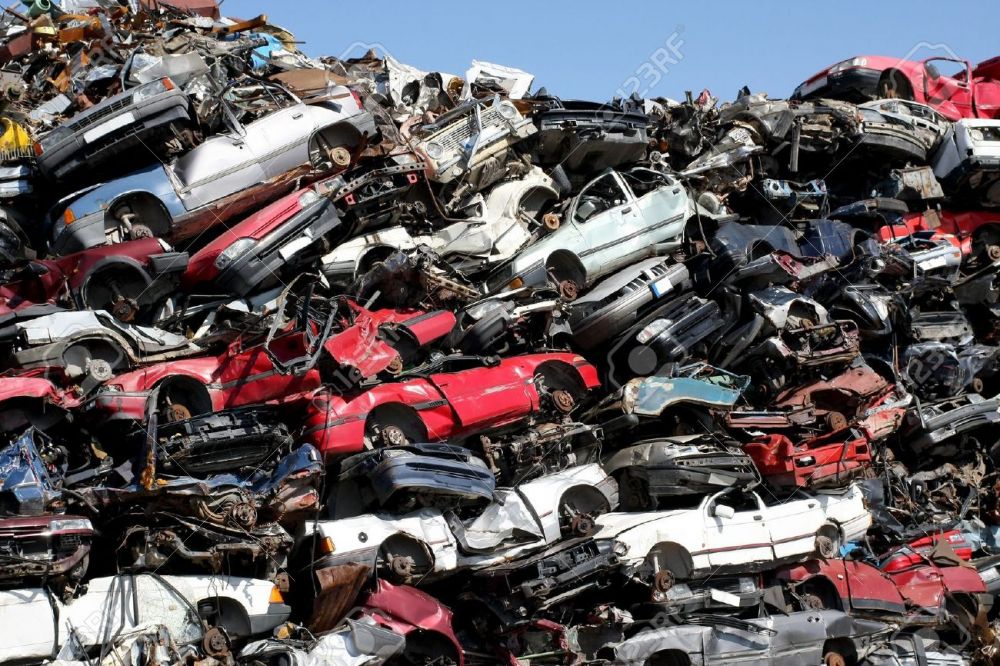
Autofluff= Automotive Shredded Residue


When cars are recycled they are first "crushed" by junkyards for ease of transport.  The junkyards are responsible for removing gas tanks and automotive fluids.  However, as you can imagine, policing these requirements is nearly impossible.  If you have ever seen a crusher in action you will notice a pool of fluids collected in the crusher bed.  Even if the cars have been properly prepared, residual fluids coating hoses, tubes, lines, pans, sumps and reservoirs are always present in the crushed stock.  The compacted blocks are then shipped to the recycler (John Ross is the only recycler in N.S.)  The stock goes through a hammer mill, breaking it into 10cm pieces.  These pieces then go through a series of separation procedures to isolate re-sellable products.  About 70% of the vehicle is recycled; the other 30% is shipped to landfills as ASR.  

The unrecyclable bits include cushion foam, rubber parts, vinyl, plastic, paint, etc.  This material is of course, coated with the residual hydrocarbon fluids previously mentioned, including engine oil, anti-freeze, brake fluid, transmission oil, hydraulic fluid, crankcase oil and others.  In addition, significant amounts of mercury are present in the fluff, as there is no requirement in N.S. (as there is in many other jurisdictions) to remove the automotive switches that contain this extremely toxic element.  NSECC seems reluctant to call this material hazardous or toxic waste although most jurisdictions classify ASR this way.  Industry publications are clear on this point.  ASR is a toxic carcinogen with hazardous levels of TCLP (toxic characteristic leaching procedure, tests mandated by EPA for most dangerous elements) metals and PCBs.  ASR leachate is also highly environmentally mobile, and a known agent of spontaneous combustion.


Yes, this ASR material has been tested by John Ross.  Oddly, the tests were carried out in North Carolina, not in N.S.  We obtained the results by foipop request. There were two reports.  The original showed levels of TCLP metals and PCBs far in excess of acceptable Canadian standards, even industrial standards.  The second report advised, in small print, that test results for TCLP metals, PCBs and moisture content had been removed from the original report at the request of John Ross.  This second report is apparently the analysis accepted by NSECC, since they claim that all tests showed toxins in ASR to be "well below" Canadian standards.  The report described the test sample as "cushion foam and paint chips," suggesting that John Ross may have "adjusted" the contents of the sample.  Indeed, the test company cited evidence of "matrix interference,"  which we assume confirms the selective content of the sample.

It should be noted that while NSECC has admitted that ASR should not be disposed of in a generation one (unlined) landfill, the department has approved a mixture of ASR and common C&D materials as an acceptable "intermediate" cover for all landfills.  We think that ASR by any other name is still ASR.

It is obvious what has been going on at Arlington.  John Ross has to get rid of a large amount of ASR.  So Ross makes a deal with a profit-minded dump owner, to dispose of the stuff in a rural gen.one facility with no oversight.  NSECC helps out by looking the other way.  Everybody stuffs their pockets and hides the records of transactions.  The arrangement was so profitable that Ross could afford to ship the material 175k, from Dartmouth to Arlington,  just to get rid of it.  However the long and loud complaints of Andy George and the Annapolis Waterkeepers eventually forced NSECC to ban the disposal of raw fluff in gen. one facilities, throwing a wrench into the scheme.. NSECC then allowed Ross to make an end run around the new regulation by approving "manufactured cover material" (ASR mixed with C&D) for use in all landfills.

We have established pristine background domestic water quality in our community.  However, the extensive testing required to identify all potential toxins from Arlington is financially prohibitive.  We have asked NSECC to create a comprehensive, ongoing water sampling regime for our domestic water supplies, but they disavow responsibility for testing water beyond dump boundaries.  However, one official test was performed (mistakenly) in 2018 on land hundreds of meters beyond dump property.  It showed toxic levels of Ammonia, Benzene, hydrocarbon contaminants, and at least eight heavy metals.  The department shrugged away the significance of the tests by attributing the results to an "exceedance" event  caused by water used to douse a 2018 fire.  However, monitoring well tests from dump property obtained by FOIPOP showed the same levels of contamination long before the fire.

It is a long story; if you want more info, let us know.
 
Kip McCurdy    

Tuesday, May 24, 2022

Three Strikes

Three current stories in the news highlight the ineffective policies of NS Department of Environment and Climate Change and NS Department of Natural Resources and Renewables

Both have promising names, neither has a good record.

The first story has three parts, all involving fire engines:


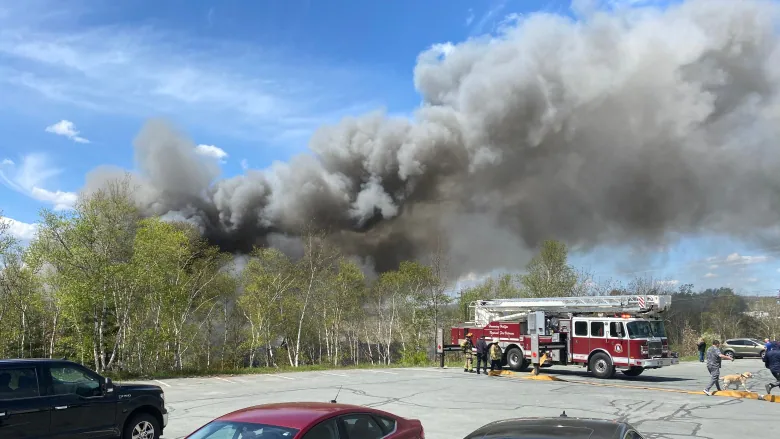
May 20, 2022 CBC Crews have put out a fire at a scrapyard in the Burnside industrial park in Dartmouth, N.S.
The fire began late Friday morning and crews were packing up to leave at about 6:15 p.m. AT.
"Streets are all open and all restrictions are off. There's no smoke anymore," said Halifax Regional Fire and Emergency district Chief Pat Kline in a phone interview shortly after 6 p.m.
Kline said Environment Canada was at the site to monitor for any contamination. He said a boom was set up by the Bedford Basin to prevent any oil residue from getting in and that it will be watched over the weekend.

Saltwire Feb 15, 2022 PARADISE, N.S. — Fire destroyed a building at a metal recycling depot in Paradise on Feb. 14.
The Bridgetown Volunteer Fire Department was dispatched to a structure fire at ScrapCo Atlantic Metal Recyclers, located on Highway 1, at 3:36 a.m.

CBC Sept 7, 2018 A major underground fire was burning Friday at a construction and demolition debris site in Nova Scotia's Annapolis County.
The Arlington Heights C&D Landfill near Bridgetown started burning around 7 a.m., but was considered under control by mid-afternoon.
Stephen Wade, chief of the Port Lorne and district fire department, said flames were no longer shooting above ground but the fire continued to burn 3½ metres underground.
Creosote lumber, vinyl siding and other buried construction debris were on fire, he said.
About 70 firefighters from eight fire halls were trying to put the fire out and expected to be on scene all day and possibly into the night. (this fire was theorized to be still burning a year later)

Oh yeah, the city folk got a text:

But not the country bumpkins......

A coincidence?   Nope.   In July 2021, the Deputy Minister admitted that an exception had been made.  

"The Arlington C&D and Asbestos Disposal Facility has been under investigation, which limited and delayed information that the department could provide.

The investigation was completed and Arlington C&D and Asbestos Disposal Facility was issued a warning for accepting material that was not approved by the department. In November of 2018, the department issued an amendment to the C&D Approval allowing a specific type of shredded C&D material to be used as an intermediate cover material at the site. The department had found that the unacceptable material had been incorporated with the construction and demolition (C&D) material. After reviewing the analytical data on the Autofluff and the water sample results, it was determined that the Autofluff is not expected to cause an adverse affect and the material will stay in place. Surface and ground water monitoring will be increased and reviewed more frequently. The facility is cooperating with the department and has obtained a third-party consultant to evaluate groundwater and surface water for additional parameters not included within their approval. The department is working with the facility to increase monitoring locations and expanding test parameters. Preliminary results have been provided and were reviewed by professional staff within the department. Additional monitoring and sampling are currently being conducted by the facility. A report with sampling results will also be reviewed by professional staff within the department. The department has the authority to extend or expand sampling requirements as necessary."

 The Second is an impending economic disaster

New York Times May 17, 2022  Europe Rethinks Its Reliance on Burning Wood for Electricity
A new proposal would significantly rewrite E.U. rules on renewable energy, ending subsidies for biomass like wood pellets. 
See this article in The Halifax Examiner:
Citizens concerned about climate change have for years opposed the government classifying biomass as “renewable energy” because clearcutting, which releases carbon from the ground, remains the dominant form of harvesting on Crown and private land. That’s despite ongoing work to begin implementing 2018 recommendations from Professor Bill Lahey to move toward a more ecological approach. 
Another $10 million bet on a loser.


Third and worst of all is the  decline of bird populations due to the murderous policy of clearcutting:

Saltwire, May 7, 2022:  A recently released paper, Forest degradation drives widespread avian habitat and population declines, by Matthew G. Betts and al., (Nature Ecology & Evolution 2022), is based on studies in Acadian type forests right here in the Maritimes. The conclusion is not something to be proud of. Our Acadian mixed forests have become severely degraded and, in many cases, replaced with coniferous softwoods or monoculture conifer plantations which are entirely unsuitable habitat for a good number of forest-dwelling bird species. Accordingly, populations of bird species that depend on Acadian type forests are dropping in sync with forest loss.

In his highly technical article, Betts says "Overall, our results indicate that forest degradation has led to habitat declines for the majority of forest bird species with negative consequences for bird populations, particularly species associated with older forest."

"habitat loss from logging has caused at least 33 million birds to disappear from the Maritimes since 1985." Betts said in this Information Morning interview.


Those departments are hereby renamed:

  • DED - Department of Environmental Degradation
  • WRONG  - Wasted Resources Of No Good